
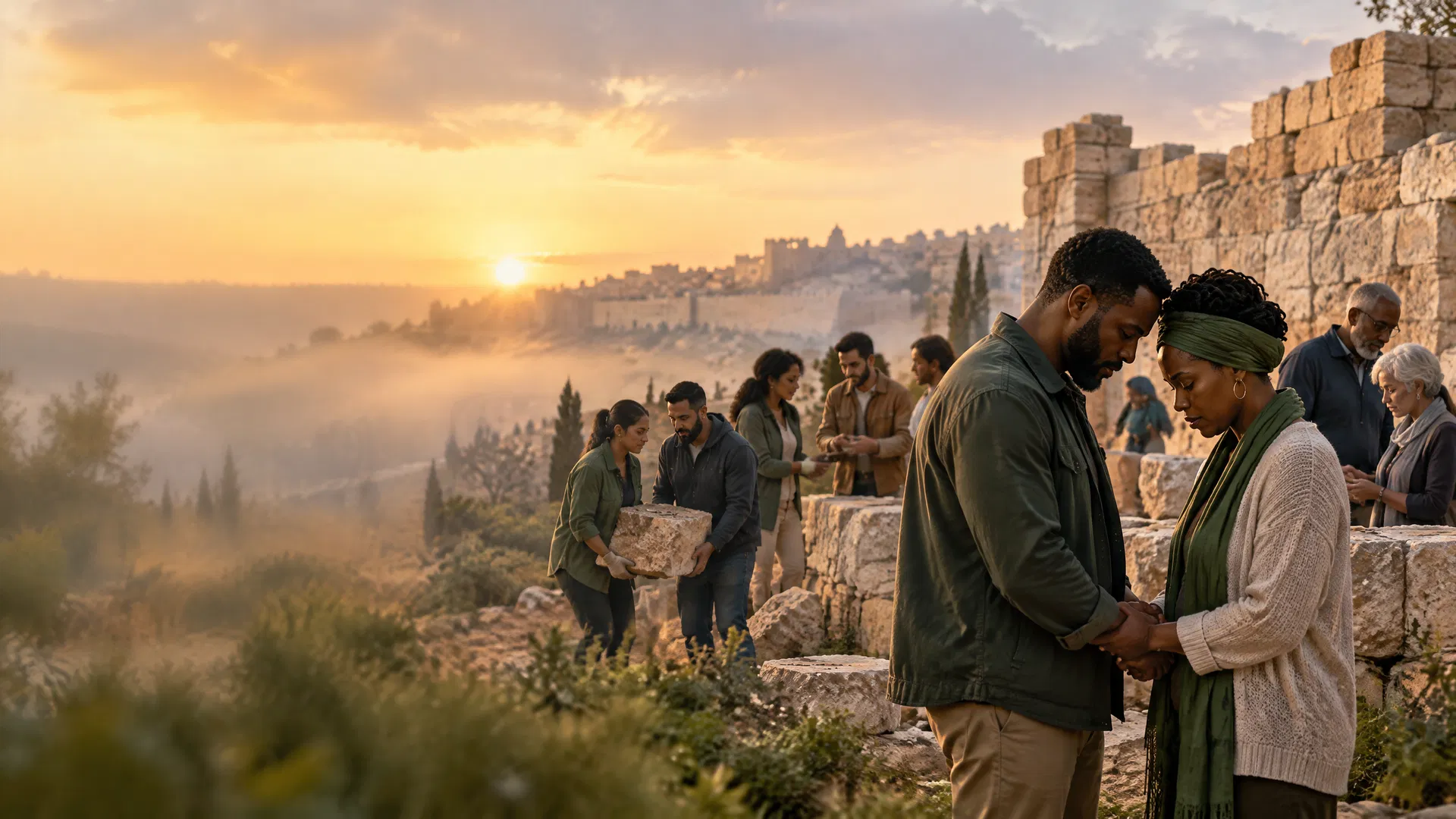
Nehemiah’s Wall: A Giving Video for Shared Vision
Nehemiah’s Wall helps churches frame generosity as shared stewardship rather than a financial transaction. This pastoral guide shows how a cinematic giving video can prepare the room for a capital campaign, Commitment Sunday, or a vision moment rooted in prayer and mission.
A church giving video should do more than introduce a campaign, display a goal, or signal that the offering moment has arrived. At its best, it helps people see themselves inside a God-given story that is larger than a number on a screen. That is the pastoral opportunity in Nehemiah’s Wall, a cinematic 3D-animated film from Mustard Seed Media. Built around the rebuilding of Jerusalem’s wall, the film gives churches language and imagery for a generosity moment rooted in prayer, shared purpose, and faithful participation.
Many leaders feel the weight of speaking about finances. They want to be transparent without being transactional, clear without being coercive, and courageous without reducing stewardship to a fundraising technique. That concern is worth honoring. Generosity is not a pause in worship so the church can cover expenses; it is one way believers answer God with the whole of their lives. The question is not merely, “How do we ask people to give?” It is, “How do we help people recognize the portion of God’s work entrusted to them?”
Nehemiah’s Wall frames giving as shared stewardship
The film begins where the biblical story begins: with a burden. Nehemiah hears that Jerusalem’s wall is broken, sits before God in grief and prayer, and eventually leads a people toward repair. The turning point is not a clever appeal. It is a community that sees the need, receives a vision, and decides that each person has a place in the work.
“So we rebuilt the wall till all of it reached half its height, for the people worked with all their heart.”
That declaration from Nehemiah 4:6 is the spiritual center of Nehemiah’s Wall. The film does not imagine generosity as a few people carrying the whole project while everyone else watches. It invites a congregation to remember that a shared future is built through many faithful responses. One household gives sacrificially. Another prays consistently. Another chooses to serve. Another releases resources that help ministry reach the next generation. No single response is the whole wall, but every faithful response strengthens it.
For pastors, this creates a better vocabulary for a capital campaign, debt-reduction initiative, legacy-giving moment, or Commitment Sunday. Instead of presenting a financial gap as the central story, the church can name the mission that the resources will serve. Will greater freedom make room for discipleship? Will a repaired facility welcome more families? Will reduced debt release dollars for outreach, missions, pastoral care, or children and students? The wall matters because of the people and purpose it protects.
Why a capital campaign video can prepare the room
Before people make a decision, they need more than information. They need space to connect their resources with the church’s calling. A well-placed creative giving film can help make that connection before the pastor ever steps to the microphone. It establishes a common emotional and spiritual frame, so the giving moment begins with vision rather than anxiety.
Nehemiah’s Wall is especially useful because its imagery moves from brokenness and burden toward prayer, commitment, and united action. It helps congregations feel the difference between a private transaction and a communal act of worship. In a service, that transition matters. A church can move from the story of Scripture to the story God is writing in its own neighborhood, then invite people to respond as participants rather than spectators.
Use the film to serve the sermon, not replace it
The strongest use of a church giving video is not as a standalone emotional moment. It is as a servant to the Word. Consider playing the film after the Scripture reading and before the teaching application. The pastor can then return to Nehemiah’s example: he prayed before he planned, he named the need honestly, and he called the people to work with their whole hearts. The visual has opened the imagination; the sermon can now supply the theological clarity and specific invitation.
For a Commitment Sunday, the same rhythm can work near the end of the message. Let the film create a moment of reflection, then give people clear next steps: pray over a commitment card, discuss the decision as a household, or come forward with a written commitment. The film should not create pressure. It should create room for people to ask God, “What has been placed in my hands, and how might I steward it for Your purposes?”
Three pastoral practices for a generosity moment
- Lead with mission before mechanics. Explain the ministry outcome before discussing the amount or timeline. People deserve to know what their shared sacrifice will make possible.
- Name participation, not comparison. Avoid language that measures faithfulness by a single dollar figure. Invite every person to seek God and take ownership of the part of the work entrusted to them.
- Make prayer visible. Nehemiah’s leadership was born in prayer. Build prayer into the service so that commitment becomes an act of worship, not merely an administrative response.
These practices also protect the tone of the moment. When a church treats generosity as discipleship, it honors people’s consciences while still calling them toward faith. When a church tells the truth about the need, connects that need to a compelling mission, and gives people room to pray, it can speak boldly without manipulation.
A film for the section of wall in front of you
Every congregation has a section of wall before it. For one church, it may be an aging building that needs renewal. For another, it may be a debt burden limiting ministry. For another, it may be a new campus, a neighborhood partnership, or a next-generation vision that requires greater capacity. The details differ, but the invitation is similar: God is not asking a few people to carry the whole story alone. He is forming a people who can rebuild together.
Nehemiah’s Wall gives pastors and creative teams a cinematic way to set that invitation before the room. It grounds a generosity conversation in Scripture, keeps the focus on ministry and mission, and helps people see faithful giving as meaningful participation in a future God is building. Use it not to make a campaign feel bigger than it is, but to help your congregation see that stewardship, prayer, and shared action can become part of something that outlasts any one household.
When the people of God rebuild with all their hearts, a wall is never just a wall. It becomes a witness: God’s people heard the burden, trusted the vision, and took their place in the work.
Share this post
Get New Posts in Your Inbox
Practical ministry resources delivered monthly. No spam.
Explore our ministry media resources
Worship videos, kids curriculum, and animated films for your church.