
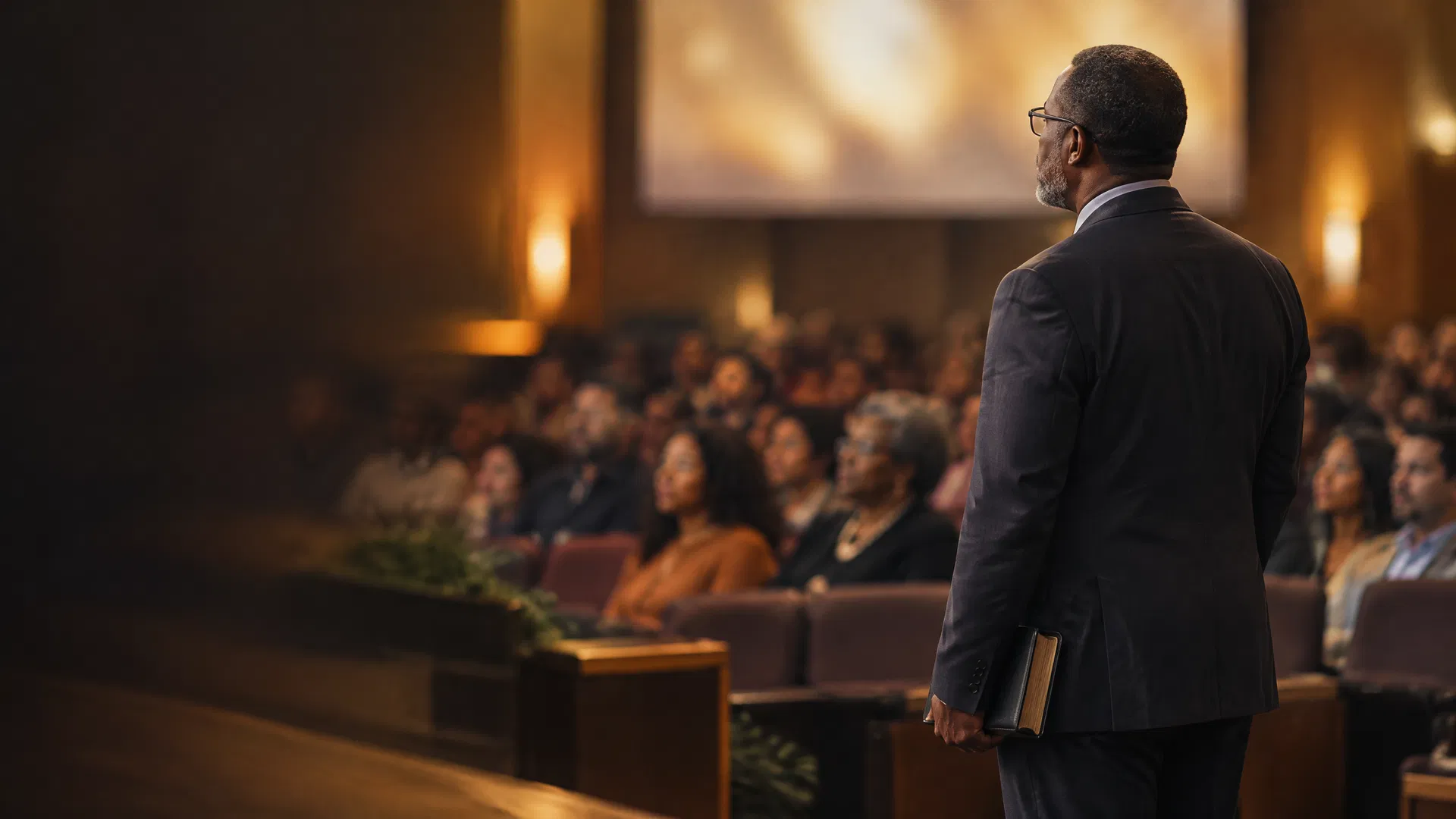
How Sermon Illustration Videos Can Serve the Word
Sermon illustration videos can prepare a congregation to receive Scripture without competing with it. Learn how films such as The Size of It, Silence Versus Stillness, and The Rhythm of Jesus can serve a wise pastoral handoff.
Pastors and worship leaders looking for sermon illustration videos are usually not looking for a clever way to fill time. They are trying to serve a real moment in the room. They may be preparing to preach about anxiety, prayer, rest, or trust, while knowing that people will arrive carrying private pressures they have not yet put into words. A well-chosen church worship video can help name that human experience before the sermon names the biblical response. But the screen must never become the point. Its work is complete when it makes the congregation more ready to hear, receive, and obey the Word.
That requires a different question than, “What video would look good here?” The better question is, “What truth is this service asking people to face, and what might keep them from hearing it?” When media begins there, it becomes a pastoral tool rather than a production accessory. It can prepare attention, give a shared image to a scattered room, and create a gentle handoff into Scripture, prayer, or response.
Sermon Illustration Videos Begin With a Pastoral Question
Every sermon carries both a biblical claim and a human obstacle. A message on God’s faithfulness may meet people who are tired of waiting. A message on peace may meet people whose thoughts have not slowed down all week. A message on stewardship may meet people who are afraid to release what they have worked hard to hold. The role of a visual story is not to solve those obstacles in two minutes. It is to help people recognize them honestly enough to bring them before God.
Name the Pressure Before You Name the Point
The Size of It offers a helpful example. This cinematic spoken-word worship film meets the familiar feeling that a health concern, financial pressure, unanswered question, or private pain has become larger than everything else. Its value is not that it supplies a sermon outline. Its value is that it gives a congregation permission to admit how large a burden can feel. A pastor preaching on God’s nearness, endurance, or hope can then open Scripture into a room that has already been invited to tell the truth about its weight.
That is the difference between a clip and an illustration. A clip occupies attention. An illustration directs attention. Before placing a film in the order of service, ask what internal conversation it is likely to awaken. Then decide where the service can take that conversation next. A worship video is most useful when it creates a path forward rather than a pause that must be overcome.
Church Worship Videos Should Create a Clear Handoff
Placement changes meaning. The same film can feel like an interruption when it appears without context, or like a carefully prepared doorway when it is followed by a clear pastoral action. A sermon opener should usually lead into a Scripture reading, the opening movement of the message, or a brief statement that helps the congregation connect the story to the text. A response film may lead into prayer, reflection, or a song. A giving film may lead into an offering invitation rooted in gratitude rather than urgency.
Build the Handoff Before You Press Play
- Identify the one sentence you want people to carry from the film into the next moment.
- Decide who will speak immediately afterward and what Scripture, prayer, or invitation will follow.
- Protect a few seconds of quiet when the story needs room to settle.
This is why Silence Versus Stillness can serve a message on hearing God, anxiety, or spiritual formation. The film reflects on the noise that can remain even after a phone is put down and the house becomes quiet. Rather than treating silence as an empty production gap, a creative team can let that recognition lead directly to a Scripture reading or guided prayer. The congregation is not being asked to admire a concept. It is being invited to examine the noise it carries and become available to God.
Visual Storytelling Can Help the Room Receive Scripture
Some leaders hesitate to use media because they do not want the emotional force of a film to compete with the authority of the Bible. That concern is healthy. Media becomes unhelpful when it asks the congregation to remember the production more than the truth it was meant to serve. Yet visual storytelling can also be an act of hospitality. It can help people who are exhausted, distracted, or unfamiliar with church language find an honest entry point into the text.
The Rhythm of Jesus explores the tension between constant demand and the need to withdraw, recover, and reconnect. A pastor teaching on Sabbath, limits, or the life of Jesus can use that image to help people feel the pace they have normalized. The message should then do the theological work: showing what Scripture reveals about rest, obedience, identity, and trust. The film awakens recognition; the Word provides revelation and direction.
Let the Message Interpret the Moment
A church worship video is not self-interpreting. Creative teams should resist the temptation to assume that a powerful image will automatically make the intended connection. The pastor, worship leader, or host can serve the congregation by naming that connection in one or two clear sentences. That short bridge keeps the moment from becoming vague and helps people understand why the film belonged in this particular gathering.
Rehearsal matters here. Watch the film in the same setting in which it will be shown, confirm audio levels, and agree on the timing of the transition. More importantly, pray through the placement together. When the preaching, worship, production, and pastoral teams share the purpose of the moment, the film does not have to carry the ministry alone. It becomes one faithful part of a larger act of worship.
Use Media to Return Attention to God
The most effective sermon illustration videos do not leave people talking mainly about how moving the video was. They leave people more alert to what God is saying, more willing to bring their real lives before Him, and more prepared to respond in faith. That is a high standard, but it is a worthwhile one. The screen already shapes the imagination of every person in the room throughout the week. In worship, it can be used more carefully: not to compete for attention, but to return attention to God.
A visual story serves the sermon when it helps the congregation see their need clearly and see the Word more expectantly.
As you plan your next service, begin with the Scripture and the spiritual need in the room. Then consider whether a film such as The Size of It, Silence Versus Stillness, or The Rhythm of Jesus can help create a faithful handoff into the Word. Explore the full Mustard Seed Media catalog and choose media that serves the moment your church is stewarding.
Share this post
Get New Posts in Your Inbox
Practical ministry resources delivered monthly. No spam.
Explore our ministry media resources
Worship videos, kids curriculum, and animated films for your church.